Category :

(East Anglian Daily Times) New Archdeacon of Ipswich announced by Church of England

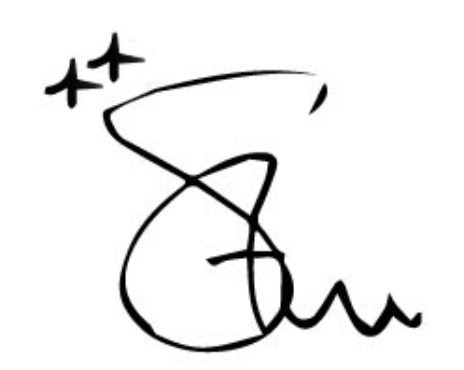
The Church of England has announced that the Revd Canon Samantha Brazier-Gibbs will take up the role in June.

She will be tasked with engaging younger people, enhancing community support, and increasing church attendance.

Currently, she is the parish priest for three rural churches in the Chelmsford Diocese and leads a team of ministers responsible for 14 parishes around Chipping Ongar.

Read it all.

Posted in Church of England, Ministry of the Ordained, Parish Ministry

Gregory the Great on Job–‘who can do these things, but the Lord? And yet a man is asked, in order that he may learn that he is unable to do these things’

After the loss of his goods, the death of his children, the wounds of his body, the words of his wife persuading him to evil, the insulting language of his comforters, and the darts of so many sorrows boldly received, blessed Job ought to have been praised by his Judge for such great power of constancy, if he had been now going to be called out of this present world. But after he is here about to receive back yet two-fold, after he is restored to his former health, to enjoy longer his restored possessions, Almighty God is obliged to reprove with strict justice him, whom He preserves alive, lest his very victory should lay him low with the sword of pride. For what commonly slays a soul more fatally than consciousness of virtue? For while it puffs it up with self-consideration, it deprives it of the fulness of truth; and while it suggests that it is sufficient of itself for the attainment of rewards, it diverts it from the intention improvement. Job, therefore, was just before his scourges but he remained more just after his scourges; and, having been praised before by the voice of God, he afterward; increased from the blow. For as a ductile tube is length ened by being hammered, so was he raised the higher in praise of God, as he was smitten with heavier chastisement But he who stood thus firm in his virtues, when prostrated by wounds, needed to be humbled. He needed to be humbled, lest the weapons of pride should pierce that most sturdy breast, which it was plain that even the wounds that had been inflicted had not overcome. It was doubtless necessary to find out a person, by comparison with whom he would have been surpassed. But what is this, which is said of him by the voice of the Lord; Thou hast seen My servant Job, that there is no man like him upon the earth. Job 1:8; 2:3. By comparison with whom then could he be surpassed, of whom it is said, on the witness of God, that he cannot be equalled, on comparison with any man? What then must be done, except for the Lord Himself to relate to him His own virtues, and to say to him, Canst thou bring forth the morning star in its season, and canst thou make the evening star to rise over the sons of men? Job 38:32. And again, Have the gates of death been opened to thee, and hast thou seen the gloomy doors? ib. 17. Or certainly; Hast thou commanded the dawn after thy rising, and hast thou shewn the morning its place? ib. 12. But who can do these things, but the Lord? And yet a man is asked, in order that he may learn that he is unable to do these things; in order that a man, who has increased with such boundless virtues, and is surpassed by the example of no man, may, that he should not be elated, be surpassed on comparison with God.

—-Gregory the Great (540-604), Book of Morals 6.Preface.1

Posted in Church History, Theology: Scripture

A Prayer for the Feast Day of Gregory the Great

Almighty and merciful God, who didst raise up Gregory of Rome to be a servant of the servants of God, and didst inspire him to send missionaries to preach the Gospel to the English people: Preserve in thy Church the catholic and apostolic faith they taught, that thy people, being fruitful in every good work, may receive the crown of glory that fadeth not away; through Jesus Christ our Lord, who liveth and reigneth with thee and the Holy Spirit, one God, for ever and ever.

Posted in Church History, Spirituality/Prayer

A prayer for the day from Prayers for the Christian Year

Almighty God, spirit of peace and of grace, whose salvation is never far from penitent hearts: We confess the sins that have estranged us from thee, dimmed our vision of heavenly things, and brought upon us many troubles and sorrows.  O merciful Father, grant unto us who humble ourselves before thee the remission of all our sins, and the assurance of thy pardon and peace; through Jesus Christ our Lord.

Prayers for the Christian Year (SCM, 1964)

Posted in Lent, Spirituality/Prayer

From the Morning Bible Readings

Take care, brethren, lest there be in any of you an evil, unbelieving heart, leading you to fall away from the living God. But exhort one another every day, as long as it is called “today,” that none of you may be hardened by the deceitfulness of sin.
For we share in Christ, if only we hold our first confidence firm to the end, while it is said,

“Today, when you hear his voice,
do not harden your hearts as in the rebellion.”

Who were they that heard and yet were rebellious? Was it not all those who left Egypt under the leadership of Moses? And with whom was he provoked forty years? Was it not with those who sinned, whose bodies fell in the wilderness? And to whom did he swear that they should never enter his rest, but to those who were disobedient? So we see that they were unable to enter because of unbelief.

–Hebrews 3:12-19

Posted in Theology: Scripture

(MTR) The cheapest way to supercharge America’s power grid

US electricity consumption is rising faster than it has in decades, thanks in part to the boom in data center development, the resurgence in manufacturing, and the increasing popularity of electric vehicles. 

Accommodating that growth will require building wind turbines, solar farms, and other power plants faster than we ever have before—and expanding the network of wires needed to connect those facilities to the grid.

But one major problem is that it’s expensive and slow to secure permits for new transmission lines and build them across the country. This challenge has created one of the biggest obstacles to getting more electricity generation online, reducing investment in new power plants and stranding others in years-long “interconnection queues” while they wait to join the grid.

Fortunately, there are some shortcuts that could expand the capacity of the existing system without requiring completely new infrastructure: a suite of hardware and software tools known as advanced transmission technologies (ATTs), which can increase both the capacity and the efficiency of the power sector.

ATTs have the potential to radically reduce timelines for grid upgrades, avoid tricky permitting issues, and yield billions in annual savings for US consumers.

Read it all.

Posted in * Economics, Politics, Corporations/Corporate Life, Economy, Energy, Natural Resources, Science & Technology

(NYT) What Slowdown? Xi Says China Must Win the Global Tech Race

Throughout China’s annual legislative meeting, the national leader Xi Jinping made clear that he wants nothing to hold back his plans for China to march past its rivals by becoming a technological superpower. Not the economic slowdown or heavy local government debt, nor a trade war with the United States.

The meeting in Beijing, called the National People’s Congress, was once a stage for Communist Party leaders to make a show of public consultation. Congress delegates, although handpicked by the party, sometimes chided officials over problems like pollution. There were even rare flashes of discord among senior officials.

Mr. Xi, though, has turned the meeting into a meticulously orchestrated, weeklong salute to himself and his vision. This time, he urged China to forge ahead in advanced technologies including artificial intelligence, biotechnology and new weapons.

“Xi has seen how decades of investment into science by the U.S. government after World War II was a knockout success for the United States, and wants to replicate that,” said Jimmy Goodrich, who studies China’s science policies as a senior adviser at RAND Corporation.

Read it all.

Posted in China

(CT) On Stanley Hauerwas’ new book–‘Come as You Are’ Is Not a Slogan for the Church

In her introduction to your latest book, Jesus Changes Everything, Tish Harrison Warren mentions something many Christians are concerned about: that we live in a post-Christian world. She’s wondering if we actually are living in a pre-Christian world and whether that might not be such a bad place to be. What’s your take on the time in which we live and the opportunities in front of the church?

Well, the mainstream Protestant church is dying. And I don’t think that’s a bad thing. It makes us free. I mean, for some time people argued that the world would go to hell if it were not Christian. That may be the case. But being Christian doesn’t mean you need a Christian America. 

What I think we’re experiencing is the ultimate working out of nihilism, which so often goes with liberalism. Liberalism is the presumption that you should have no story except the story you chose when you had no story.

Read it all.

Posted in America/U.S.A., Anthropology, Books, Church History, Ethics / Moral Theology, History, Parish Ministry, Politics in General, Religion & Culture, Theology

A Provincial Letter from Archbishop Steve Wood

(Via email-KSH).

Dear Brothers and Sisters in Christ,

Grace and peace to you from God our Father and the Lord Jesus Christ.

I am sending my quarterly Provincial Letter a few weeks early as I have good news to report.

First, greetings from Christ Church Plano, where I am attending the G25 GAFCON Global Mini Conference, along with 120 Primates and Bishops from around the world. This gathering, organized by +Paul Donison, the General Secretary for GAFCON, is an endeavor to introduce our most recently elected Bishops to the history of, and our deep roots in, GAFCON.

As I have reported in previous updates, over the past several months we have been engaging in a restructuring process, which has included a review of our current provincial staff structure and functions, the audit and assessment of our current internal systems and platforms, the development of a new organizational chart, and the recruitment and screening of candidates for four new Director roles.

Before I introduce you to our four new Directors, I wanted to offer a few words of thanks. First, and most profoundly, I am grateful to and appreciate the work of Deborah Tepley. Her commitment to Jesus Christ and His church is deep, inspiring, and gives guidance to her life and work. Deborah has led our restructuring work these past several months with excellence and the whole of our Province is indebted to her.

Secondly, our Restructuring Committee, an ad hoc committee of the Executive Committee, has been meeting regularly since November and guiding this process for the Province. The work of this Committee, comprised of Dr. Joan Deeks, Sheryl Vittitoe, Bishop Ryan Reed, and Deborah Tepley, is now completed. I am incredibly grateful for the time, effort and expertise this Committee has contributed over these past months. I am also grateful for the support of those who made up our interview teams, which included Jonathan Millard+, +Steve Breedlove, Sheryl Vittitoe, Lee Hilts, and Jeff Weber+.

As a part of our overall structural changes, we are changing Deborah Tepley’s title from Chief Operating Officer to Executive Director, as this reflects the full extent of her role and is a title typical in a non-profit setting. 

Now, onto introductions. We have hired four Directors: Director of Outreach and Development, Director of Administration and Operations, Director of Safeguarding and Canonical Affairs, and Director of Finance (fractional). I am providing the names and bios of our four new hires below. Please join me in welcoming this incredibly talented and experienced group to the Provincial staff team. 

Kate Harris, our new Director of Outreach and Development, brings a diverse background in non-profit and ministry leadership, most recently serving as the founder and principal of Pulley Advising, a strategy firm helping mission-driven clients grow their impact. She began her career as a press officer for the Colorado State Senate and worked in strategic communications for U.S. Senate leadership. She later helped found and manage stakeholder relationships for Wedgwood Circle, supported business development for the University of Oxford Estates Division, and managed special projects for Oxford Analytica, a global consultancy. Subsequently, Kate served as Interim Executive Director of The Fellows Initiative and as Executive Director of The Washington Institute for Faith, Vocation, and Culture, where she authored Wonder Woman: Navigating the Challenges of Motherhood, Career, and Identity (Zondervan, 2014) and was Assistant Producer of ReFrame, a 10-week film-based course developed by Regent College to help Christians connect their faith with all areas of life. She has an MA in English Literature, was an Ingram scholar at Vanderbilt University, and graduated with a BS in Journalism from the University of Colorado at Boulder.

Kate and her family are active members of Restoration Anglican Church (Diocese of the Mid-Atlantic) in Arlington, Virginia, a church plant of The Falls Church Anglican, where she worshipped for more than 17 years after first arriving as a Falls Church Fellow in 2002. Kate is wife to a good man and mother to their four children. Kate says, “I am so grateful for Anglicanism’s faithful witness and practices that prioritize unity and shared hope in Christ. I am excited to learn from all of the amazing ministry leaders who have built the Church into what it is today, and I’m eager to help discern and contribute to its next season of mission and growth.”

Dr. Tiffany Butler, our new Director of Safeguarding and Canonical Affairs, possesses a rare blend of extensive religious and theological studies focused on practical theology, canon law, and ethics, practical experience supporting the canonical presence of the church in the world and in ecumenical dialogue, and approximately six years’ professional experience as an Ethics and Compliance Specialist focused on Safeguarding with World Concern, a Christian international transformational development organization. Dr. Butler holds a PhD in Ethics and Practical Theology from the University of Edinburgh’s School of Divinity. Her thesis examined the intersection of migration, ecclesiologies, and canon law. Dr. Butler also holds an MDiv from Fuller Theological Seminary with an emphasis in Just Peacemaking and two BAs – one from Seattle Bible College in Practical Theology with a Global Outreach major and another from the University of Washington’s Jackson School of International Studies in the Foreign Policy, Diplomacy, Peace, and Security track. Dr. Butler is a competent, fluent, and sympathetic communicator, and she has over 20 years of experience working locally and internationally among faith-based organizations in Belize, Brazil, Ecuador, Mexico, and Kenya.

Dr. Butler has been a member of the ACNA and her local parish of Holy Trinity Edmonds (Diocese of Cascadia) in Washington State since 2018. She quickly became involved as a researcher for the Orthodox Church in America and the Anglican Church in North America (OCA/ACNA) Ecumenical Dialogue Task Force, particularly concerning rapprochement and canonical affairs. Dr. Butler also served as a lay member of the Cascadia Diocesan Council and a lay representative at GAFCON 2023.

Dr. Butler enjoys worshiping with her local church family at Holy Trinity Edmonds, and she is excited to serve the wider ACNA Province as the Director of Safeguarding and Canonical Affairs. She says, “I am passionate about the Church being a safe place for all, particularly for vulnerable individuals. My vocational means of serving Christ’s Church is through relationships expressed in the living canons. Alexander Schmemann defined the quality of canonicity as that which serves to ‘assure, express, defend, and fulfill the Church as Divinely given Unity.’ My heart is to work diligently by the grace of God in Christ Jesus to ensure that our actions as a Province meet this high calling for the good of the whole in love.”

Dan Hassler, our new Director of Administration and Operations, brings a significant breadth of experience from his 14 years of service at The Moody Bible Institute. As Director of Change Management, Dan led projects and initiatives spanning every aspect of the Institute, including Education, Publishing, Finance, HR, Operations, IT, and Advancement. In his most recent position, Dan has served as the Manager of Business Analysis for the Information Technology Services department at Moody. In this role, he has been instrumental in implementing new software, meeting complex needs with efficient solutions, and developing and shepherding a team of IT experts. His greatest professional joy is identifying organizational needs and crafting meaningful solutions. Dan holds a BA degree from The Master’s College.

Dan and his family are active members of Cornerstone Anglican Church (Diocese of the Upper Midwest) in the Portage Park neighborhood of Chicago, IL, where Dan serves on the Vestry as the Treasurer. He is married to Desirée, his beloved wife of 26 years and father to four amazing kids. They live in Oak Park, IL, a Chicago suburb. In his free time, Dan enjoys reading (extensively) and playing bluegrass banjo (poorly). Dan says, “The Anglican Church has played a pivotal role in my spiritual growth in recent years and I am honored to have this opportunity to use my giftings to ensure that the ACNA flourishes for years to come.”

Keith Moore, our interim fractional Director of Finance, came to Christ at 21 and has been a serial small-business entrepreneur since graduating from Covenant College in 1976. In 2000, he decided to take his business experience and use it on behalf of churches and faith-based nonprofits. He worked with numerous nonprofits such as Mission to the World, World Hope International and International Justice Mission on enterprise software projects and served as Project Director for a multi-mission back-office support group. He served as the Director of Finance Manager at Grace DC, a PCA network of churches in Washington, DC, where he resides and also is a member. In 2014 he began working on the concept of remote business support for churches which led to founding Auxilio in 2019 which today supports over 150 churches and nonprofits in 33 states.

Keith is married to Patty (50 years this June) and they are blessed with four children and 15 grandchildren. Keith says, “I am very excited to be part of this journey that God has the ACNA on and to help the Provincial office and staff become an even more strategic, missional and helpful support to the dioceses, congregations and congregants.”

We are currently hiring for a Content and Media Relations Manager, who will support Kate Harris, as well as an Events Manager, who will report to Dan Hassler.

Last but not least, we are preparing for Provincial Council, which will be held at Trinity Anglican Seminary’s new Trophimus Center on June 18-20. This will be a smaller event for Bishops and diocesan delegates.

Please know that this letter comes with my gratitude for our shared ministry and my continued prayers.

Yours in Christ, 

Archbishop Steve Wood

Posted in Anglican Church in North America (ACNA)

(Economist) How Trump provoked a stockmarket sell-off

The sell-off shows no sign of stopping. America’s S&P 500 index dropped by another 3% on March 10th, leaving the world’s most watched stockmarket down by almost 9% since its peak last month. The NASDAQ, dominated by tech firms, has fallen by 13%. It is not quite the bold new era of American growth that President Donald Trump had in mind.

His unpredictable trade policies got things going. Tariffs of 25% on imports from Canada and Mexico—which were instituted on March 4th, before being suspended for a month on March 6th—top investors’ list of concerns. But after years of impressive growth, the future of the American economy is a growing source of anxiety, too, with worries provoked by a steady drip of discouraging data. Such news is beginning to undermine belief in American exceptionalism: after all, investors have seen much better returns in China and Europe this year. And as is often the case when markets fall, each development has revealed fresh things to lose sleep over.

Read it all.

Posted in * Economics, Politics, Economy, President Donald Trump, Stock Market

A prayer for the day from B F Westcott

Blessed Lord, who wast tempted in all things like as we are, have mercy upon our frailty.  Out of weakness give us strength; grant to us thy fear, that we may fear thee only; support us in time of temptation; embolden us in time of danger; help us to do thy work with good courage, and to continue thy faithful soldiers and servants unto our life’s end.

Posted in Lent, Spirituality/Prayer

From the Morning Scripture Readings

Therefore, holy brethren, who share in a heavenly call, consider Jesus, the apostle and high priest of our confession. He was faithful to him who appointed him, just as Moses also was faithful in God’s house. Yet Jesus has been counted worthy of as much more glory than Moses as the builder of a house has more honor than the house. (For every house is built by some one, but the builder of all things is God.) Now Moses was faithful in all God’s house as a servant, to testify to the things that were to be spoken later, but Christ was faithful over God’s house as a son. And we are his house if we hold fast our confidence and pride in our hope.
Therefore, as the Holy Spirit says,

“Today, when you hear his voice,
do not harden your hearts as in the rebellion,
on the day of testing in the wilderness,
where your fathers put me to the test
and saw my works for forty years.
Therefore I was provoked with that generation,
and said, “‘They always go astray in their hearts;
they have not known my ways.’
As I swore in my wrath,
“‘They shall never enter my rest.’”

–Hebrews 3:1-11

Posted in Theology: Scripture

(Church Times) Sally Welch–In the parish: Giving a warm welcome to all

“The Death of the Hired Man” by Robert Frost is an extraordinary poem. In a deceptively simple narrative style, it relates the discussion between a farmer and his wife over whether to offer shelter to the itinerant labourer whose work has been somewhat unsatisfactory in the past.

Silas has arrived at their doorstep, “a miserable sight — and frightening too”. Warren is unwilling to offer him employment again, but Mary’s kind heart won’t allow him to turn away a man who has “nothing to look backward to with pride and nothing to look forward to with hope”. She believes that he has “come home to die”, which feeling gives rise to the well known phrases: “Home is the place where, when you have to go there They have to take you in,” and “I should have called it Something you somehow haven’t to deserve.” Warren is persuaded to offer Silas work in order to keep his pride, but this offer is redundant: Silas, worn out by life and aware of reaching sanctuary at last, has died.

In a strange, lyrical way, this poem sums up the joy and the challenge of the “welcoming church”: the grace-filled obligation to accept in Jesus’s name every person who seeks entry to the worshipping community, no matter who they are or what they might believe. Every church leader, I suspect, secretly prides themselves on their welcoming attitude to stranger and seasoned churchgoer alike, and, if we are occasionally troubled by a feeling that perhaps not everyone feels instantly “at home”, then how easy it is to reassure ourselves that the fault lies, if not with the congregation, then certainly with one or two trickier members of it.

Enter the mystery worshipper….

Read it all.

Posted in Church of England, Evangelism and Church Growth, Parish Ministry, Pastoral Care, Poetry & Literature

(WSJ) China Is Waging a ‘Gray Zone’ Campaign to Cement its growing Power. Here’s How It Looks.

From the choppy waters of the South China Sea and Taiwan Strait to the frozen ridges of the Himalayas, China is pursuing a relentless campaign of expansion, operating in the hazy zone between war and peace to extend its power across Asia.

Beijing carefully calibrates each move with the aim of staying below the threshold of action that could trigger outright conflict. But, step by incremental step, it has pushed deeper into contested areas, exhausting opponents and eroding their strength with a thousand cuts.   

Whether it is probes by war planes, maneuvers by coast guard ships or the creeping construction of new civilian settlements, China is constantly pushing boundaries in what security strategists call the “gray zone.” It tests the limits of what its opponents consider tolerable behavior, escalating a bit with every new action.

The Wall Street Journal reviewed years of ship-movement data, satellite images, flight-tracking information and other measures of Chinese activity. Taken together, it shows a clear intensification of tactics meant to intimidate rivals and deepen China’s control.

Read it all.

Posted in Asia, China, Foreign Relations, Military / Armed Forces, Science & Technology

(PD) John Doherty–Society Stays Christian Longer If It Respects Religious Freedom: New Evidence from Pew

The question of which view of religious freedom—the Puritans’ or the Quakers’—was the more Christian one is a debate for theology; it seems plain to me at least that the Quaker view is more that of contemporary Christianity, especially as articulated in the Catholic Church’s Dignitatis Humanae. What the social science behind the Pew Religious Landscape Survey can suggest is that, at least in the long run, Quakers’ respect for freedom of conscience might be more effective than Puritans’ integration of church and state in maintaining a Christian society. Although the differences in Christian identification between New England and the Delaware Valley today are not so large in the case of certain states, the Delaware Valley still comes out on top; and its metropolis, Philadelphia, easily outdoes New England’s preeminent city, Boston. Moreover, the one outlier state in New England that does better than much of the Delaware Valley in Christian religiosity—Rhode Island—was precisely founded on the principle of religious freedom, in protest of Puritan rigidity. 

How might New England’s and the Delaware Valley’s different religious attitudes have accounted for their long-term religiosity? Although many New England Puritans were surely sincere, their harsh public policing of orthodoxy led many other Christians (like Roger Williams) to leave New England. Many who stayed perhaps conformed outwardly without interior sincerity. Some came to see Christianity cynically—as a tool of hypocritical political rulers who only wanted to control others—and they made little effort to pass on belief to their children. Others conformed out of fear and came to see Christianity as rules by which to live in order to survive, not a truth that sets one free; such religiosity was probably not very attractive to potential converts. Many later New Englanders, such as Nathaniel Hawthorne, saw the society of their Puritan ancestors this way—as shown in Hawthorne’s The Scarlet Letter. Speculations aside, both historical data and scholarship (such as Kevin Vallier’s book All the Kingdoms of the World) show how religiously authoritarian regimes tend to harm both religious and political culture in the long run.

In the Delaware Valley, on the other hand, religion and politics were clearly distinguished: people were given the freedom to open themselves genuinely to religious truth, without fear of political reprisal. Thus, as Dignitatis Humanae says, truth was allowed to enter their minds “by virtue of its own truth, . . . quietly,” and therefore permanently, “with power.” If religious truth is to take possession of a person, he has to make it his own, in love, until he says with the poet in the Song of Songs: “I have got him, and I will not let him go.”

Read it all.

Posted in America/U.S.A., History, Law & Legal Issues, Politics in General, Religion & Culture

(Bloomberg) Mark Carney Wins Canada Liberal Contest, Will Succeed Trudeau in Days

Mark Carney won the race to become Canada’s next prime minister, putting the former central banker in charge of the country just as US President Donald Trump’s administration threatens its economic future.

The ex-Bank of Canada and Bank of England governor won the contest to lead the Liberal Party of Canada with nearly 86% of the vote. The transfer of power from Justin Trudeau to Carney is expected to take place within days, and it’s possible he will call a national election soon after.

Carney, 59, takes the reins at a time when the White House is creating upheaval in the global economy — and with US trading partners — with increasingly chaotic tariff announcements.

Read it all.

Posted in Canada, Politics in General

Prayers for the Anglican Diocese of South Carolina this week

Posted in * Anglican - Episcopal, * South Carolina, Parish Ministry, Spirituality/Prayer

A prayer for the day from the ACNA prayerbook

Almighty God, whose blessed Son was led by the Spirit to be tempted by Satan: Come quickly to help us who are assaulted by many temptations, and, as you know the weaknesses of each of us, let each one find you mighty to save; through Jesus Christ your Son our Lord, who lives and reigns with you and the Holy Spirit, one God, now and for ever.  Amen.

Posted in Spirituality/Prayer

From the Morning Scripture Readings

On the third day there was a marriage at Cana in Galilee, and the mother of Jesus was there; Jesus also was invited to the marriage, with his disciples. When the wine gave out, the mother of Jesus said to him, “They have no wine.” And Jesus said to her, “O woman, what have you to do with me? My hour has not yet come.” His mother said to the servants, “Do whatever he tells you.” Now six stone jars were standing there, for the Jewish rites of purification, each holding twenty or thirty gallons. Jesus said to them, “Fill the jars with water.” And they filled them up to the brim. He said to them, “Now draw some out, and take it to the steward of the feast.” So they took it. When the steward of the feast tasted the water now become wine, and did not know where it came from (though the servants who had drawn the water knew), the steward of the feast called the bridegroom and said to him, “Every man serves the good wine first; and when men have drunk freely, then the poor wine; but you have kept the good wine until now.” This, the first of his signs, Jesus did at Cana in Galilee, and manifested his glory; and his disciples believed in him.

After this he went down to Caper′na-um, with his mother and his brothers and his disciples; and there they stayed for a few days.

–John 2:1-12

Posted in Theology: Scripture

A prayer for the day from the Church of England

Almighty God,
whose Son Jesus Christ fasted forty days in the wilderness,
and was tempted as we are, yet without sin:
give us grace to discipline ourselves in obedience to your Spirit;
and, as you know our weakness,
so may we know your power to save;
through Jesus Christ your Son our Lord,
who is alive and reigns with you,
in the unity of the Holy Spirit,
one God, now and for ever.
Amen.

Posted in Lent, Spirituality/Prayer

From the Morning Bible Readings

Now John’s disciples and the Pharisees were fasting; and people came and said to him, “Why do John’s disciples and the disciples of the Pharisees fast, but your disciples do not fast?” And Jesus said to them, “Can the wedding guests fast while the bridegroom is with them? As long as they have the bridegroom with them, they cannot fast. The days will come, when the bridegroom is taken away from them, and then they will fast in that day. No one sews a piece of unshrunk cloth on an old garment; if he does, the patch tears away from it, the new from the old, and a worse tear is made. And no one puts new wine into old wineskins; if he does, the wine will burst the skins, and the wine is lost, and so are the skins; but new wine is for fresh skins.”

–Mark 2:18-22

Posted in Theology: Scripture

Robert Ellis’ OCMS lecture–Geoffrey Studdert Kennedy: The Pastor and the Suffering God

War broke out in August and in September 1914 Geoffrey Studdert Kennedy wrote these words in his parish magazine:

“I cannot say too strongly that I believe every able-bodied man ought to volunteer for service anywhere. Here ought to be no shirking of that duty.”

This from the man who would, before long be writing this, “Waste”:

“Waste of Muscle, waste of Brain,
Waste of Patience, waste of Pain,
Waste of Manhood, waste of Health,
Waste of Beauty, waste of Wealth,
Waste of Blood, and waste of Tears,
Waste of Youth’s most precious years,
Waste of ways the Saints have trod,
Waste of glory, Waste of God–War!”

Read it all.

Posted in Anthropology, Church History, Church of England, England / UK, Ethics / Moral Theology, History, Military / Armed Forces, Ministry of the Ordained, Poetry & Literature, Theology

A Prayer for the Feast Day of Geoffrey Anketell Studdert Kennedy

Glorious God, we give thanks for high and holy things as well as the common things of earth: Awaken us to recognize thy presence in each other and in all creation, so that we, like Geoffrey Studdert Kennedy, may love and magnify thee as the holy, undivided Trinity; who liveth and reigneth one God, for ever and ever. Amen.

Posted in Church History, Spirituality/Prayer

A prayer for the day from Frank Colquhoun

Save us, O God, from the false piety that parades itself in the eyes of men and is not genuine in thy sight; and so sanctify us by thy Spirit that both in heart and life we may serve thee acceptably, to the honour of thy holy name; through Jesus Christ our Lord.

Posted in Lent, Spirituality/Prayer

From the Morning Bible Readings

The next day Jesus decided to go to Galilee. And he found Philip and said to him, “Follow me.” Now Philip was from Beth-sa′ida, the city of Andrew and Peter. Philip found Nathan′a-el, and said to him, “We have found him of whom Moses in the law and also the prophets wrote, Jesus of Nazareth, the son of Joseph.” Nathan′a-el said to him, “Can anything good come out of Nazareth?” Philip said to him, “Come and see.” Jesus saw Nathan′a-el coming to him, and said of him, “Behold, an Israelite indeed, in whom is no guile!” Nathan′a-el said to him, “How do you know me?” Jesus answered him, “Before Philip called you, when you were under the fig tree, I saw you.” Nathan′a-el answered him, “Rabbi, you are the Son of God! You are the King of Israel!” Jesus answered him, “Because I said to you, I saw you under the fig tree, do you believe? You shall see greater things than these.” And he said to him, “Truly, truly, I say to you, you will see heaven opened, and the angels of God ascending and descending upon the Son of man.”

–John 1:43-51

Posted in Theology: Scripture

(Church Times) Book review: ‘Why We Believe: Finding meaning in uncertain times’ by Alister McGrath, by Bishop John Inge

I have read many books by Alister McGrath, renowned scientist and theologian. I have appreciated all of them and, indeed, reviewed one very positively in these columns only a year ago (Books, 23 February 2024). This, though, is the best I have read (Feature, 21 February). It is quite simply brilliant, a must-read for those who want to reflect deeply on the whole question of belief. It will be particularly helpful to those who want to be able to defend their own. I remember Rowan Willams being quoted as saying something along the lines that it could be such a relief not to be made to feel foolish for embracing belief. No one who has read this book need do that.

The intention of the author is consider belief in general, not just religious belief. Demonstrating clearly that it just won’t do to pretend that we live in a “purely factual, belief-free world”, he concludes that “believing is not only intellectually defensible but existentially necessary” (his italics). He offers many fascinating references from a variety of disciplines as, with characteristic clarity and accessibility, he presents a highly sophisticated argument.

In powerful testimony, McGrath explains how, having been raised in Northern Ireland during the Troubles, he gave up on religion. His first love was the natural sciences; he became an atheist with a strong interest in Marxism. It was as an Oxford undergraduate — ironically, through reading the atheist Bertrand Russell’s History of Western Philosophy — that he began to realise that it was possible to hold beliefs without being able to prove them and, in fact, that to live life to the full it was imperative to do so. “Only shallow truths can be proven,” he writes, “not the profound existential, moral and spiritual beliefs that bestow dignity and significance upon human life.”

Read it all.

Posted in Apologetics, Books, Church of England (CoE), CoE Bishops, England / UK, Religion & Culture, Theology

(New Atlas) World’s first “Synthetic Biological Intelligence” runs on living human cells

The world’s first “biological computer” that fuses human brain cells with silicon hardware to form fluid neural networks has been commercially launched, ushering in a new age of AI technology. The CL1, from Australian company Cortical Labs, offers a whole new kind of computing intelligence – one that’s more dynamic, sustainable and energy efficient than any AI that currently exists – and we will start to see its potential when it’s in users’ hands in the coming months.

Known as a Synthetic Biological Intelligence (SBI), Cortical’s CL1 system was officially launched in Barcelona on March 2, 2025, and is expected to be a game-changer for science and medical research. The human-cell neural networks that form on the silicon “chip” are essentially an ever-evolving organic computer, and the engineers behind it say it learns so quickly and flexibly that it completely outpaces the silicon-based AI chips used to train existing large language models (LLMs) like ChatGPT.

“Today is the culmination of a vision that has powered Cortical Labs for almost six years,” said Cortical founder and CEO Dr Hon Weng Chong. “We’ve enjoyed a series of critical breakthroughs in recent years, most notably our research in the journal Neuron, through which cultures were embedded in a simulated game-world, and were provided with electrophysiological stimulation and recording to mimic the arcade game Pong. However, our long-term mission has been to democratize this technology, making it accessible to researchers without specialized hardware and software. The CL1 is the realization of that mission.”

Read it all.

Posted in Science & Technology

(Economist) Donald Trump’s economic delusions are already hurting America

In his speech to Congress on March 4th President Donald Trump painted a fantastical picture. The American Dream, he declared, was surging bigger and better than ever before. His tariffs would preserve jobs, make America richer still, and protect its very soul. Unfortunately, in the real world things look different. Investors, consumers and companies show the first signs of souring on the Trumpian vision. With his aggressive and erratic protectionism, Mr Trump is playing with fire.

By imposing 25% tariffs on goods from Canada and Mexico, also on March 4th, Mr Trump is setting light to one of the world’s most integrated supply chains. Although he belatedly delayed duties on cars by one month, plenty of other industries will suffer. He has also raised tariffs on China and has threatened the European Union, Japan and South Korea. Some of these duties may also be deferred; others may never materialise. Yet in economics as in foreign relations, it is becoming clear that policy is being set on the president’s whim. That will cause lasting damage at home and abroad.

When Mr Trump won the election in November, investors and bosses cheered him on. The S&500 rose by nearly 4% in the week after the vote in anticipation of the new president lighting a bonfire of red tape and bringing about generous tax cuts. His protectionist and anti-immigration rhetoric, investors hoped, would come to nothing. A stockmarket correction or a return of inflation would surely curb his worst instincts.

Alas, those hopes are going up in smoke….

Read it all.

Posted in * Economics, Politics, America/U.S.A., Economy, Politics in General, President Donald Trump

(Local Paper) Daylight Saving Time is more diabolical than losing an hour of sleep, experts say

“We have a lot of data to go to a permanent Standard Time,” Burman said. “So hopefully (Daylight Saving) will, in the next few years, get eliminated.”

There are biological reasons the time change is harmful, said Dr. Jigme Sethi, physician-executive for Sleep Medicine at the Medical University of South Carolina. The body has an internal clock that governs many functions and runs on a 24.2-hour cycle, the circadian rhythm of activity and rest. There is also a solar clock that pays attention to light and darkness and helps set the internal clock, Sethi said. When those are properly aligned, the body functions normally.

But with Daylight Saving, there is more darkness in the morning, when the body is trying to wake, and more daylight into the evening, when rest and then sleep should be coming on, Sethi said.

This can lead to immediate consequences. The number of fatal accidents increases by 6 percent the weekday after, and those accidents are more likely in the morning, according to a 2020 study. An analysis of criminal sentences handed down on the Monday after the time change found sleep-deprived judges gave out prison terms that were 5 percent longer than those on the preceding or following Mondays, one study found.

Medical errors also seem to rise soon after the time change, Sethi said.

But there are also long-term consequences, particularly for children, Burman said.

Read it all.

Posted in * South Carolina, America/U.S.A., Anthropology, Health & Medicine, History

A Prayer for the Feast Day of Perpetua, Felicity and Her Companions

O God, the King of Saints, who didst strengthen thy servants Perpetua, Felicity, and their companions to make a good confession and encourage one another in the time of trial: Grant that we who cherish their blessed memory may share their pure and steadfast faith and win with them the palm of victory; through Jesus Christ our Lord, who liveth and reigneth with thee and the Holy Spirit, one God, for ever and ever. Amen.

Posted in Africa, Church History, Death / Burial / Funerals, Spirituality/Prayer